
If you have ever looked into getting your carpets professionally cleaned, you have probably seen both terms: "steam cleaning" and "hot water extraction." Some companies use one, some use the other, and a lot of people use them like they mean the same thing.
So are they the same thing? Not exactly. And if you are trying to understand what you are actually paying for, the difference matters.
Let me clear this up after 10 years of doing this work.
Why Everyone Calls It "Steam Cleaning"
Here is the truth: almost nobody in the carpet cleaning industry says "steam cleaning" when they are talking to each other. We say "hot water extraction." But when we talk to homeowners, we say "steam cleaning" because that is the word people know. It is what they search for online. It is what they expect to hear.
I do the same thing. My website says "steam cleaning." My service pages say "steam cleaning." If I said "hot water extraction" to every customer who called, half of them would not know what I was talking about.
But there is a real difference between the two, and it is worth understanding.
What Is Actual Steam Cleaning?
Real steam cleaning uses steam — water vapor heated to the point where it becomes a gas. Steam cleaners heat water to 250 degrees or more, producing steam under pressure that is applied to a surface. The steam itself does the cleaning, breaking down dirt and killing bacteria.
And here is the important part: actual steam cleaning is almost never used on carpet. Steam at those temperatures can damage carpet fibers. It can delaminate the backing — that is the latex that holds the primary and secondary backing together. It can cause synthetic fibers to melt or distort. It can set stains permanently by driving them deeper into the fiber.
I have never used a true steam cleaner on carpet in 10 years. Neither has any responsible professional cleaner I know.
What Is Hot Water Extraction?
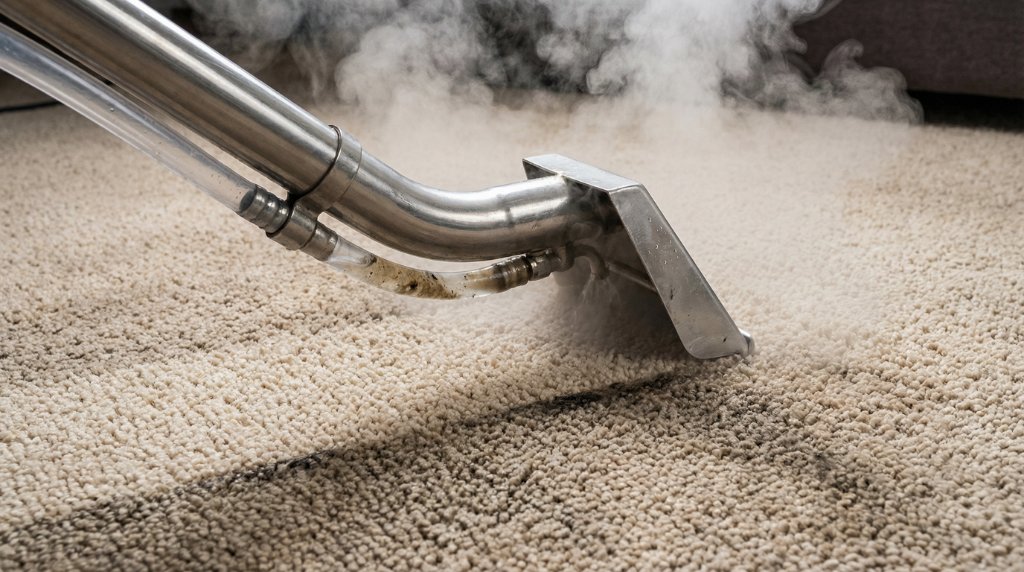
Hot water extraction is the method that carpet manufacturers actually recommend. It is the method that the IICRC teaches. And it is what professional carpet cleaning machines actually do.
Here is how it works. Hot water — not steam, but hot liquid water — is heated to somewhere between 150 and 200 degrees. That water is mixed with a cleaning solution and injected into the carpet under pressure. The pressure pushes the solution deep into the fibers, where it loosens dirt, oils, and soil.
Almost immediately, a powerful vacuum extracts the water, the cleaning solution, and all the loosened dirt back out of the carpet. That is the "extraction" part. The dirty water goes into a waste tank and leaves your home.
The key word is extraction. The whole process is about flushing soil out of the carpet and pulling it away. Not just getting the carpet wet and hoping the dirt comes up.
Why the Difference Matters for Your Carpet
If someone shows up at your house with an actual steam cleaner and starts blasting your carpet with 250-degree steam, you have a problem. The heat can warp the fibers, melt the backing, and set stains permanently.
Hot water extraction is different. The water is hot enough to be effective — heat helps break down oils and releases soil from fibers — but it is not so hot that it damages the carpet. And the extraction immediately removes the water and soil, which means the carpet is not sitting in moisture for long.
This is why every major carpet manufacturer recommends hot water extraction. Not steam cleaning. Not dry cleaning. Not bonnet cleaning. Hot water extraction. Many of them actually require it to keep your warranty valid.
What About Those Rental Machines?
You know the Rug Doctor at the grocery store? That is technically a hot water extraction machine. But there is a reason professional results look different.
Rental machines heat water to maybe 150 degrees if you are lucky, and the vacuum is weak. You inject water and solution into the carpet, but you cannot pull enough of it back out. The carpet stays wet for hours — sometimes a full day. And when carpet stays wet that long, a few things happen. The dirt that was deep in the pad wicks back up to the surface as it dries, leaving spots that were not there before. The moisture creates a perfect environment for mold and mildew. And any cleaning residue left in the carpet acts like a magnet for new dirt.
My equipment heats water to over 200 degrees, and the vacuum is powerful enough to pull most of the water out before it has a chance to settle. Your carpet is damp, not soaked. It dries in a few hours, not a full day.
So What Should You Ask?
When you are hiring a carpet cleaner, you do not need to get caught up in terminology. Most of us use "steam cleaning" and "hot water extraction" to mean the same thing when we are talking to customers. It is just easier that way.
But if you want to know what you are actually getting, ask these questions:
- What method do you use? (The answer should be hot water extraction.)
- What temperature does your equipment heat the water to? (150+ degrees is what you want to hear.)
- How long does the carpet take to dry? (2-6 hours is normal. 12+ hours is a red flag.)
If they say "steam cleaning" and they actually mean hot water extraction, that is fine. That is just the word people use. But if they literally mean steam, walk away.
The Bottom Line
Steam cleaning and hot water extraction are not the same thing. One uses steam, which can damage your carpet. The other uses hot water and powerful extraction, which is what carpet manufacturers recommend.
I use hot water extraction on every carpet I clean. I have for 10 years. It is the safest, most effective method available — and it is what your carpet warranty probably requires.
By Lucky Johnson

Know What You Are Paying For
When you hire Steam Lion, you get hot water extraction — the method manufacturers recommend.
Request an In-Home Consultation Schedule a Service Appointment Call (847) 250-6975