
Why the Confusion? The Great Carpet Cleaning Debate
If there is one thing I have learned over my ten-plus years as a carpet cleaning professional on Chicago's North Shore, it is that homeowners are incredibly confused about carpet cleaning. Every week, someone asks me: 'Lucky, what is actually the best carpet cleaning method?' It is an excellent question, and the confusion is completely understandable. If you open a mailer or search online, you are bombarded with aggressive marketing. One company swears by 'dry cleaning' that lets you walk on carpets instantly, while another promotes 'carbonated cleaning' like a magical breakthrough. Then, large franchise operations claim their commercial portable extractors are the only option. Each claim sounds convincing, but many are just clever marketing spins on basic methods.
As an IICRC-certified master textile cleaner, I want to clear up the confusion and break down the industry's five primary cleaning methods. In this guide, I will explain how they work, their pros and cons, and when they should—and should not—be used. You will understand how to choose the right approach to protect your flooring investment and keep your indoor air healthy.
Hot Water Extraction: The Uncontested Gold Standard
Let us start with hot water extraction, the professional term for 'steam cleaning.' Despite the name, we do not use pure steam. Instead, we inject highly pressurized, hot water—typically between 180 and 220 degrees Fahrenheit—infused with specialized cleaning agents. We spray this heated solution deep into the fibers to break up grease, dirt, and allergens, then immediately extract it with a powerful dual-vacuum extraction system.
The Institute of Inspection, Cleaning and Restoration Certification (IICRC) recommends hot water extraction as the primary method for deep cleaning residential carpets. In fact, major manufacturers like Mohawk and Shaw require this method every twelve to eighteen months to maintain warranties. It is the only method that reaches all the way to the backing to flush out deeply embedded soils, pet dander, pollen, and other biological contaminants, making it the undisputed gold standard for your home.
Dry or Encapsulation Cleaning: Fast and Functional
Next is encapsulation cleaning, often marketed as 'dry carpet cleaning.' This modern method uses specialized polymers sprayed onto the carpet. When agitated with a counter-rotating brush machine, these polymers act like microscopic magnets, surrounding and crystallizing around the soil particles. Once dry, usually in twenty to thirty minutes, the encapsulated dirt is simply vacuumed away.
This method is popular in commercial spaces like offices because it requires zero dry time. It is also excellent for regular, low-moisture maintenance. However, encapsulation has major limitations. It is a surface-to-mid-depth cleaning method that cannot flush out deep, compacted soils, heavy grease, or biological contaminants from the bottom of the pile. While fantastic for routine commercial maintenance, it should never fully replace deep residential hot water extraction.
Bonnet Cleaning: A Quick Surface Refresh
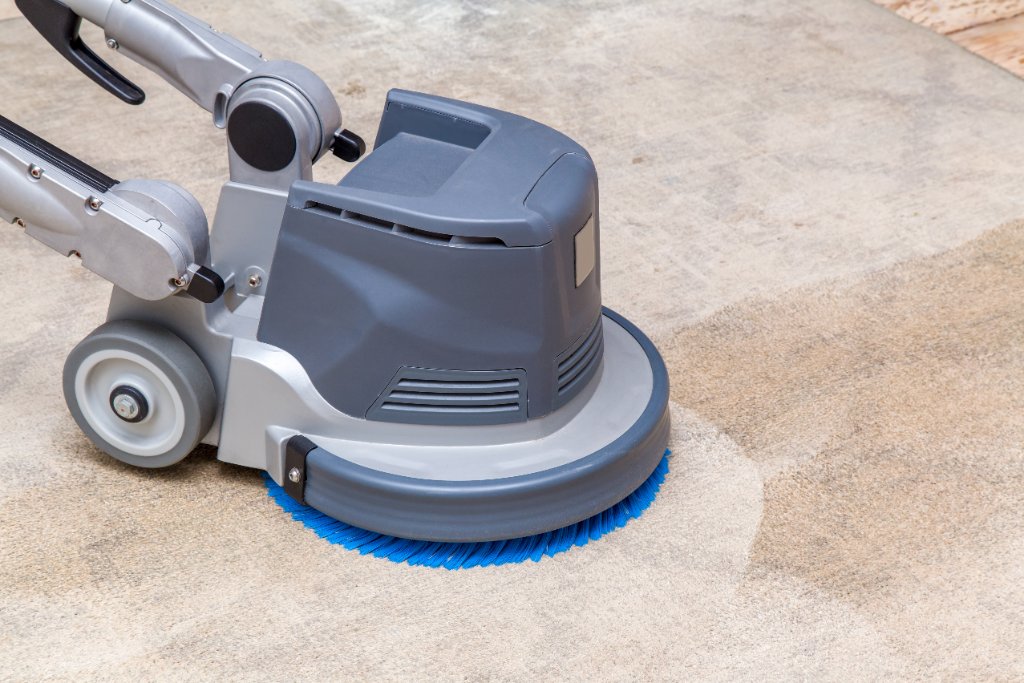
Bonnet cleaning is another low-moisture method often used in large commercial buildings like hotels. A cleaning solution is sprayed onto the carpet, then a heavy rotary machine equipped with a spinning, absorbent cotton or microfiber pad (the bonnet) is run over the floor. The spinning pad uses friction and chemical action to absorb soil from the top of the carpet fibers.
While bonnet cleaning is exceptionally fast and makes carpets look immediately brighter, it is strictly a cosmetic, surface-only clean. It does not penetrate deep into the pile, nor can it extract soil from the backing. Worse, if bonnets are not changed frequently, the machine simply spins dirt around, resetting it deeper. For residential homes, bonnet cleaning is not recommended as it leaves sticky residues and causes premature wear.
The Shampoo Method: An Obsolete Relic of the Past
Before modern technology, there was carpet shampooing. This old-school method involves applying a thick, soapy detergent to the carpet and scrubbing it vigorously with a rotary brush machine to create heavy foam. The idea was that the foam would suspend the dirt, which could then be vacuumed up. Today, professional cleaners consider traditional shampooing largely obsolete, and for good reason.
The biggest issue is that shampooing relies on heavy, high-alkaline soap formulas that are incredibly difficult to rinse out. It leaves behind a thick, sticky residue on the carpet fibers. Once the carpet dries, this residue acts like a dirt magnet, attracting dust, foot traffic soil, and grease at an accelerated rate. Modern hot water extraction and encapsulation have replaced this outdated method, offering far better results without sticky, fiber-clogging soaps.
Why the Method Must Match Your Carpet Fiber
Many homeowners assume that a carpet is just a carpet, but different fibers require radically different cleaning approaches. For example, synthetic fibers like nylon and polyester are incredibly durable, heat-resistant, and non-porous. They can easily handle high-alkaline detergents and boiling-hot water extraction. However, natural fibers like wool are entirely different stories.
Wool is a delicate protein fiber. If you apply the same high heat and high-pH alkaline detergents used on synthetics to a wool carpet, you will ruin it. You will cause the natural fibers to shrink, warp, and shed, and you will likely trigger severe color bleeding. Wool requires low-moisture, low-temperature extraction using pH-neutral, WoolSafe-certified agents. Similarly, delicate silk, viscose, or cotton rugs demand highly specialized dry-solvent or low-moisture methods. A true professional doesn't just show up with one machine and one soap; they inspect the fibers and custom-tailor the cleaning method.
The Real Answer: There Is No Single 'Best' Method
So, what is the real answer to the big question? The truth is, there is no single 'best' carpet cleaning method. The absolute best method is the one that is carefully matched to your carpet's fiber type, age, installation, soil level, and daily usage.
If you have a busy home with kids, pets, and high-traffic lanes on synthetic wall-to-wall carpeting, hot water extraction is indisputably the best choice to sanitize and deep-clean. If you need to maintain a busy commercial office lobby where downtime is not an option, encapsulation cleaning is the ideal solution. If you have a delicate hand-woven wool heirloom rug, a highly modified, low-moisture, low-pH extraction or specialized rug bath is the only safe way to clean it.
Conclusion: Choose Experience Over Clever Marketing
When it is time to have your carpets cleaned, do not fall for high-pressure sales pitches or too-good-to-be-true pricing. A cheap cleaner with a rented machine can easily ruin your expensive flooring by using the wrong method, excessive heat, or harsh chemicals. Instead, look for an owner-operated company with deep roots in your community and extensive training.
As an IICRC-certified professional with over ten years of professional experience, now serving Northbrook, Glenview, and Chicago's North Shore, I make sure every job is done right. At Steam Lion, we do not believe in one-size-fits-all cleaning. We evaluate your carpets, test for fiber types and dye stability, and use the exact equipment and chemistry needed to deliver a safe, deep, and lasting clean. Your carpets represent a major investment. Protect that investment by hiring a certified pro who truly knows the difference between methods.
By Lucky Johnson

Get the Right Clean for Your Carpets
Not sure which cleaning method is right for your home? Let Lucky Johnson and the Steam Lion team provide a professional assessment and the perfect deep clean.
Request an In-Home Consultation Schedule a Service Appointment Call (847) 250-6975